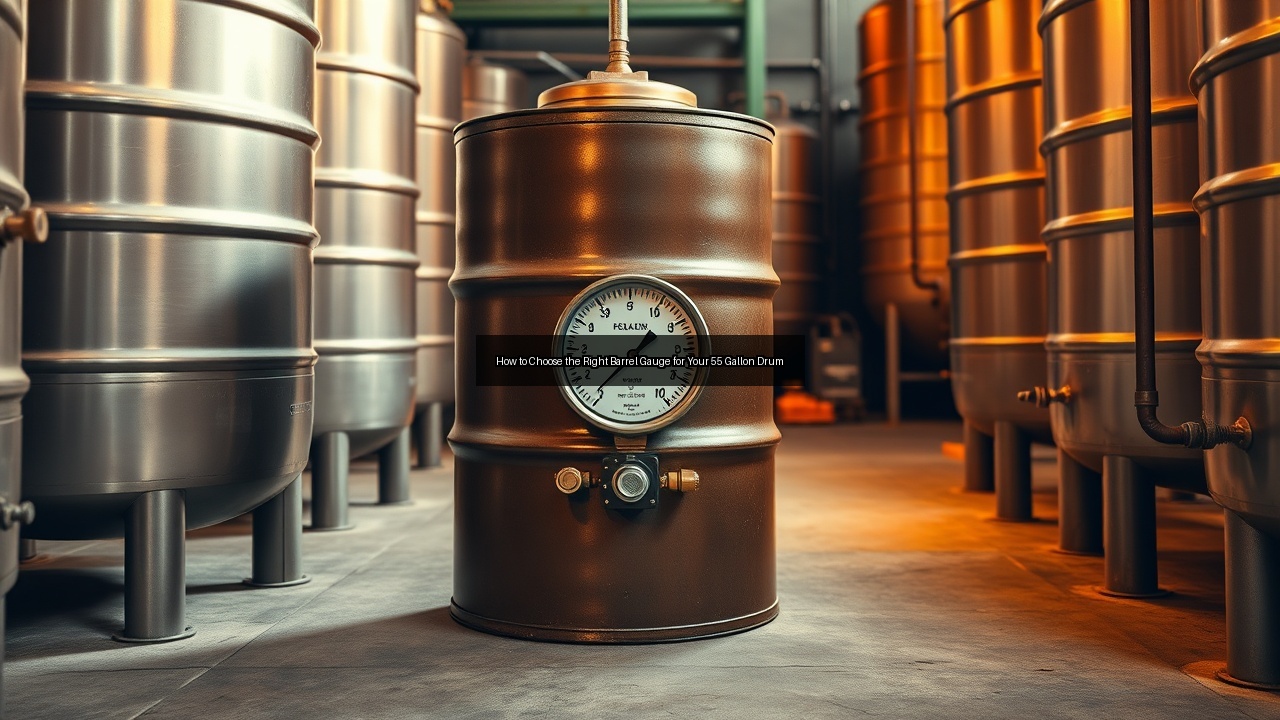
How to Choose the Right Barrel Gauge for Your 55 Gallon Drum
Understanding Barrel Gauges
What is a Barrel Gauge?
A barrel gauge measures liquid levels inside storage containers like the 55 gallon drum. Operators insert the device through the drum bung to track fluid height accurately. This tool prevents overfills and shortages by providing direct readings of remaining volume. Users rely on barrel gauges across farms, factories, and warehouses to maintain inventory control. The device converts depth measurements into usable volume data without requiring complex electronics in basic models. Proper selection ensures compatibility with the drum's interior dimensions and avoids interference with seals or lids. Regular use extends the life of stored materials by signaling when replenishment becomes necessary.
Barrel gauges operate on straightforward principles of displacement and buoyancy or electronic sensing. When inserted vertically through the 2-inch NPT bung opening found on most 55 gallon drums, a calibrated rod or probe reaches the container bottom. Markings etched or printed along the shaft correspond to both inches of depth and converted gallon volumes based on the drum's standard 22.5-inch interior diameter. This direct method eliminates guesswork associated with tilting drums or relying on weight scales. In practice, operators record readings at the start and end of shifts to calculate consumption rates, supporting just-in-time ordering that minimizes carrying costs. The absence of power requirements in mechanical versions makes them ideal for hazardous locations where spark risks must be avoided.
Types of Barrel Gauges Available
Barrel gauges come in several forms suited to different drum applications. Mechanical dipsticks offer simple, no-power operation for quick checks in remote locations. Float-based systems rise and fall with the liquid surface to deliver continuous visual readings. Electronic versions employ sensors that transmit data to remote displays or control panels. Each type addresses specific needs when measuring contents in a 55 gallon drum or larger tanks. Selection depends on whether the user needs portable spot checks or integrated monitoring. Manufacturers in the United States produce models resistant to corrosion from oils, chemicals, and water-based fluids commonly stored in drums.
Mechanical dipsticks remain popular for their ruggedness and zero maintenance beyond occasional cleaning. Constructed from stainless steel or fiberglass, they provide instant visual confirmation of liquid height when withdrawn and inspected against a scale. Float-based gauges, meanwhile, incorporate a buoyant marker that travels along a guide tube, offering at-a-glance readings through a sight window without removing the device. Electronic models utilize ultrasonic, radar, or capacitive sensors to achieve sub-inch resolution and often include data-logging capabilities that integrate with inventory management software. Hybrid designs combine a mechanical float with a transmitter for facilities transitioning from analog to digital systems. Across all variants, U.S. manufacturers emphasize compliance with OSHA and EPA guidelines for safe handling of flammable or corrosive substances.
Common Uses for Barrel Gauges in the United States
Industries across the United States deploy barrel gauges to manage inventory in 55 gallon drums. Chemical plants track hazardous liquids to comply with safety regulations. Agricultural operations monitor fuel and pesticide levels in remote storage areas. Food processors use gauges to ensure consistent ingredient supplies during production runs. Municipal facilities apply the same tools to water treatment tanks and waste collection drums. These applications reduce waste and support accurate ordering schedules. Barrel gauges also help operators detect leaks early by showing unexpected drops in liquid height.
Beyond routine inventory, barrel gauges support regulatory audits and environmental reporting. In the oil and gas sector, for example, they verify volumes of drilling mud additives before transport to well sites. Breweries and distilleries rely on them to confirm sanitizer and cleaning chemical levels, ensuring production hygiene standards. Emergency response teams carry portable units during spill containment exercises to rapidly assess drum integrity. The widespread adoption across regions from the Midwest agricultural belt to Gulf Coast refineries underscores the gauge's role in preventing both financial losses and environmental incidents through proactive level management.
Factors to Consider When Choosing a Barrel Gauge
Material Compatibility with 55 Gallon Drums
Drum contents dictate the materials used in a barrel gauge. Stainless steel resists acids and solvents that attack aluminum or plastic components. Polypropylene floats work well with water-based solutions but fail in aggressive hydrocarbons. Seal materials must match the stored liquid to prevent swelling or degradation over time. Users should verify chemical resistance charts before installation in any 55 gallon drum. Incompatible materials lead to inaccurate readings and premature failure. Proper matching extends gauge life and protects the integrity of both the drum and its contents.
Selecting the correct wetted materials requires consulting manufacturer compatibility databases that list performance against hundreds of chemicals at various temperatures and concentrations. For instance, Viton seals excel with petroleum products while EPDM performs better with alcohols and ketones. In food-grade applications, only FDA-compliant plastics and 316 stainless steel are acceptable to avoid contamination. Operators should also consider galvanic corrosion when dissimilar metals contact inside the drum, especially when storing electrolytes or brines. Thorough material evaluation prevents both measurement drift and potential drum liner damage over multi-year service periods.
Accuracy and Precision of Measurements
Accurate measuring prevents costly errors when managing drum inventories. High-precision barrel gauges provide readings within one-eighth inch of actual liquid level. Calibration marks must align with the drum's internal geometry for reliable volume conversion. Temperature fluctuations can expand or contract both the liquid and the gauge components, affecting results. Operators should select models with temperature compensation features when storing volatile fluids. Consistent accuracy supports regulatory compliance and reduces the risk of spills during transfers.
Precision specifications vary by technology; mechanical dipsticks typically achieve ±1/8-inch repeatability while ultrasonic sensors can reach ±0.1 inch under controlled conditions. Volume conversion tables supplied with each gauge account for the slight variations in drum manufacturing tolerances. When liquids exhibit significant thermal expansion coefficients, such as gasoline or acetone, operators apply correction factors derived from built-in or separate thermometers. Regular verification against certified master gauges during quality audits ensures ongoing compliance with standards such as those from NIST or industry-specific bodies.
Ease of Installation and Use
Simple installation encourages frequent checks and better inventory control. Threaded barrel gauges screw directly into standard drum bungs without special tools. Quick-release mechanisms allow removal for cleaning or drum relocation. Clear markings and intuitive scales reduce training time for new staff. Digital models require battery access and wiring routes that fit the drum layout. Users should choose designs that permit one-handed operation when working around full tanks or crowded storage areas.
Ergonomic considerations prove especially important in high-throughput facilities where operators may check dozens of drums daily. Lightweight fiberglass dipsticks reduce wrist strain compared with solid metal rods. Color-coded level bands and large-print scales improve readability under varying lighting conditions. For digital units, wireless models eliminate cable management issues and allow rapid redeployment when drums are rotated or relocated within a warehouse. Documentation provided by reputable suppliers includes step-by-step installation guides and troubleshooting flowcharts to minimize downtime during initial setup.
Types of Measurements and Their Importance
Liquid Level Measurement in Tanks
Liquid level measurement forms the core function of any barrel gauge. Direct readings from a 55 gallon drum translate into precise remaining volume calculations. Operators schedule refills based on these measurements to avoid production interruptions. In larger tanks, multiple gauges provide cross-verification and identify stratification issues. Consistent level data supports just-in-time inventory systems and reduces capital tied up in excess stock. Accurate tracking also reveals consumption patterns that inform purchasing decisions across facilities.
Effective level measurement enables predictive maintenance and process optimization. By logging daily readings, facilities can forecast depletion rates with statistical confidence and negotiate better supplier contracts. In stratified liquids such as oil-water mixtures, dual-point gauges detect interface levels, preventing accidental pumping of the wrong phase. Integration with enterprise resource planning software transforms raw level data into actionable reorder alerts, reducing both stockouts and excess inventory carrying costs.
Temperature and Pressure Considerations
Temperature changes alter liquid density and volume inside drums and tanks. Barrel gauges with built-in thermometers allow operators to adjust readings accordingly. Pressure variations in sealed containers can distort float positions or sensor outputs. Users must select models rated for the expected operating range to maintain accuracy. In cold climates across the United States, heated gauges prevent freezing that blocks movement. Proper consideration of these factors ensures reliable performance year-round.
Extreme pressure conditions arise in drums containing gases or during temperature-induced vapor expansion. Gauge designs rated for vacuum or positive pressure up to 15 psi incorporate reinforced seals and vented housings to preserve accuracy. In northern climates, integrated heating elements or insulated jackets maintain float mobility when ambient temperatures drop below freezing. Conversely, high-temperature applications require materials with elevated thermal stability to prevent warping of guide tubes or sensor drift.
Calibration and Maintenance of Gauges
Regular calibration keeps barrel gauges trustworthy over extended service life. Users compare readings against known volumes in a test drum at scheduled intervals. Cleaning removes residue that interferes with float travel or sensor contact. Replacement of worn seals and batteries prevents sudden failures during critical operations. Maintenance logs document performance trends and support warranty claims. Facilities that neglect calibration risk regulatory violations and inaccurate stock records.
Best practices include quarterly verification for critical applications and annual full recalibration traceable to national standards. Cleaning protocols specify appropriate solvents that dissolve residues without damaging components. Digital units benefit from firmware updates that improve sensor algorithms and battery monitoring. Comprehensive maintenance programs also track mean time between failures, helping procurement teams select more reliable models for future purchases.
Comparing Barrel Gauges: Analog vs Digital
Advantages of Analog Gauges
Analog barrel gauges deliver readings without batteries or external power sources. Mechanical simplicity reduces failure points in harsh environments around 55 gallon drums. Operators interpret direct scale markings instantly without menu navigation. These gauges tolerate wide temperature swings and electromagnetic interference common in industrial settings. Low cost and minimal training requirements make analog models popular for basic level checks. Durability in outdoor storage areas further supports their continued use across many sectors.
Analog gauges also excel in intrinsically safe environments where electrical equipment requires expensive certifications. Their passive operation means no risk of ignition sources around flammable vapors. Many facilities maintain analog units as backup systems for power outages or as primary instruments in remote field locations lacking infrastructure. Long service intervals and readily available replacement parts contribute to their sustained popularity despite the rise of digital alternatives.
Benefits of Digital Gauges
Digital barrel gauges provide remote monitoring capabilities through wired or wireless connections. High-resolution displays show precise measurements and can log historical data for trend analysis. Alarm functions alert personnel to low levels or rapid changes before problems escalate. Integration with plant control systems improves overall process efficiency. Battery life in modern units often exceeds two years under normal conditions. Users gain flexibility when managing multiple tanks from a central location.
Advanced digital models offer Modbus, HART, or IoT connectivity that feeds data directly into SCADA or cloud platforms. Configurable alarm thresholds and automatic escalation via SMS or email reduce response times to abnormal conditions. Data historians enable root-cause analysis of consumption anomalies and support sustainability reporting by quantifying material usage with high granularity.
Cost Considerations for Different Gauge Types
Initial purchase price varies widely between analog and digital barrel gauges. Basic mechanical models cost far less than sensor-equipped units with remote displays. Long-term expenses include calibration services, battery replacements, and potential downtime from failures. Digital systems may reduce labor costs through automated alerts and centralized data collection. Facilities should evaluate total ownership costs against the value of improved measurement reliability and reduced waste in their specific drum applications.
Return-on-investment calculations typically favor digital gauges in facilities with more than twenty drums under active management, where labor savings offset higher upfront costs within two to three years. Analog gauges deliver the lowest total cost of ownership for low-frequency checks or temporary storage. Hybrid approaches that combine mechanical gauges with occasional electronic verification provide a balanced strategy for many mid-sized operations.
Applications of Barrel Gauges in Various Industries

Industrial Applications for 55 Gallon Drums
Manufacturing plants use barrel gauges to monitor lubricants and process chemicals stored in 55 gallon drums. Accurate measuring supports lean inventory practices and prevents line stoppages. Paint and coating operations track pigment levels to maintain consistent batch quality. Automotive repair shops rely on gauges for oil and coolant management. These applications demonstrate the practical value of reliable level indication in daily operations.
Additional industrial uses include monitoring of hydraulic fluids in heavy equipment maintenance bays and tracking of solvents in printing facilities. Consistent readings allow precise batch formulation, reducing off-spec product and associated disposal expenses. In metalworking shops, gauges help maintain optimal coolant concentrations that extend tool life and improve surface finishes.
Environmental Monitoring with Barrel Gauges
Environmental teams deploy barrel gauges to track rainwater collection and runoff containment in storage tanks. Early detection of level changes signals potential spills or leaks from 55 gallon drums. Regulatory agencies require documented measurements for hazardous waste accumulation areas. Consistent monitoring supports compliance reporting and reduces liability. Portable gauges allow quick assessment during site inspections across the United States.
These instruments also support stormwater management programs and groundwater protection initiatives. By quantifying collected volumes, facilities can optimize treatment capacity and demonstrate adherence to NPDES permit conditions. Portable electronic units equipped with GPS logging create auditable records for environmental site assessments.
Safety Protocols Using Gauges in Storage Tanks
Safety protocols mandate regular level checks to prevent over-pressurization in sealed tanks. Barrel gauges provide visible confirmation that contents remain within safe operating limits. High-level alarms integrated with digital models trigger automatic shutoff valves during filling operations. Personnel follow written procedures that reference gauge readings before opening drum lids or initiating transfers. These steps protect workers and facilities from releases of flammable or toxic materials.
Documented gauge readings form an essential part of job safety analyses and lockout/tagout procedures. Facilities incorporate gauge verification into daily pre-task planning to identify anomalies before they escalate. Training programs emphasize the interpretation of both normal operating ranges and out-of-specification conditions to foster a strong safety culture.